

Welcome to the first MindMending newsletter of 2025! We are happy you are here with us, and can’t wait to dive in to the uncertainty of Parkinson’s.
At MindMend Biotech LLC, we believe that early and accurate understanding of Parkinson’s pathology is the key to transforming patient care.
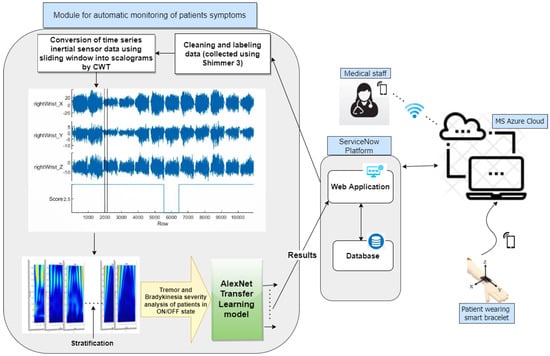
Recent years have witnessed an explosion of wearable devices designed to monitor the motor symptoms of Parkinson’s disease. From AI-powered systems embedded in smartwatches to cloud-connected bracelets that quantify tremor, bradykinesia, and even detect falls automatically, these innovations have shifted the paradigm of patient care. Studies have demonstrated the potential of deep learning models using time frequency representations of inertial data to capture subtle motor fluctuations with clinician-level accuracy. In parallel, platforms such as NeuroRPM (now FDA-cleared) have underscored the promise of consumer devices entering clinical domains by continuously tracking motor symptoms throughout the day.
These advances illustrate that continuous, objective monitoring can empower clinicians with actionable data and support personalized therapy adjustments. However, while wearable systems are evolving rapidly, challenges such as data privacy concerns, high device costs, and false-positive rates (for example, in fall detection) remain topics of active debate. So let’s look at these advances specifically!
AI-Powered Wearables: Revolutionizing Parkinson’s Care or Invading Patient Privacy?
While cutting edge continuous monitoring devices now leverage deep learning to track subtle motor fluctuations in Parkinson’s patients (as seen in recent cloud connected bracelet studies), critics warn that aggregating minute by minute health data may lead to unprecedented privacy risks and potential misuse by commercial or state actors.
Recent FDA clearances and cloud-based platforms (e.g., NeuroRPM’s breakthrough on the Apple Watch) have put AI front and center in clinical care, but at what cost for personal data security?
Continuous Monitoring in Parkinson’s: Empowering Patients or Fueling Anxiety?
Continuous, wearable monitoring offers the promise of personalized treatment adjustments based on real time data. However, some experts contend that constant data feedback may turn patients into data-obsessed individuals who become overly anxious about minor fluctuations potentially leading to over-treatment or unnecessary lifestyle changes.
As wearable systems become ubiquitous in tracking motor states and falls, the psychological impact of living under continuous surveillance is coming under scrutiny.
High-Tech Hope or High-Cost Hurdle? The Digital Divide in Parkinson’s Monitoring
Controversial Twist:
Advanced wearable systems that integrate cloud analytics and deep learning promise to transform Parkinson’s management, but these devices can cost several hundred dollars. Critics argue that while affluent patients may benefit from precise, continuous monitoring, a significant portion of the population may be left behind, exacerbating existing healthcare inequalities.
With several studies demonstrating impressive accuracy in symptom quantification via wearables, the debate is now shifting to affordability and equitable access in a 2025 healthcare environment.
Deep Learning Diagnostics in Parkinson’s: Advanced Clinical Insight or AI Overreach?
New deep learning models that process time frequency maps of inertial data claim to quantify Parkinson’s motor symptom severity with clinician-like accuracy. Still, some veteran neurologists worry that overreliance on algorithmic interpretation may diminish clinical intuition and lead to misdiagnosis when subtle patient nuances are overlooked.
As papers emerge demonstrating the promise and limitations of approaches like InceptionTime and ROCKET for PD symptom detection, the medical community debates whether AI should be an assistant or a decision-maker in patient care.

Despite the promising advances, challenges persist. Wearable technology for Parkinson’s disease is still grappling with issues such as:
Data Privacy & Security: Continuous monitoring generates vast amounts of sensitive health data. As discussions around AI-driven wearables intensify, ensuring that patient data are protected remains paramount.
Cost and Accessibility: High-tech solutions often come with steep price tags. We remain committed to developing a cost-effective solution to help bridge the digital divide in healthcare.
Algorithmic Accuracy and Clinical Integration: While deep learning techniques have improved the sensitivity and specificity of symptom monitoring, false positives (e.g., in fall detection) and over reliance on automated systems may risk oversimplifying complex clinical nuances.
Battery Life and Usability: The trade-off between continuous data collection and device battery longevity is an ongoing engineering challenge. We continue to innovate to ensure our devices are both robust and user-friendly for long-term, free-living use.
At MindMend Biotech LLC, our mission is to transform these challenges into opportunities. By advancing the frontier of wearable technology from traditional inertial sensor monitoring to real-time biochemical measurement we are poised to redefine how Parkinson ‘s disease is understood, monitored, and treated.